

The Trees We Inherit: Caring for the Past, Planting for the Future

Every tree has a story. Some were planted by people who never lived long enough to enjoy their full shade. Others were here long before our homes, streets, and neighbourhoods existed. What we choose to protect and plant today will shape the Campbell River that future generations inherit.

The Trees That Were Here Before Us
Take a walk through an established Campbell River neighbourhood, and you will find trees that have witnessed decades of change.
Towering Douglas-firs, mature cedars, old fruit trees, and ornamental trees planted by previous homeowners are all part of our community's living history.
Some of these trees were here before the houses around them. Others were planted with the hope that one day they would provide shade, beauty, and a place for wildlife.
When we purchase a property, we often inherit more than a home and garden. We become caretakers of trees that may have been growing for generations.
And with that comes an opportunity to consider what we will leave behind.
Campbell River's Changing Tree Canopy

In 2015, the City of Campbell River developed an Urban Forest Management Plan to guide the protection, care, and growth of our community's trees.
The plan identified that approximately 33% of the land within Campbell River's Urban Containment Boundary was covered by tree canopy, based on 2012 imagery.
It also warned that without changes to tree protection and planting practices, canopy cover could eventually decline to approximately 20% as development continued.
To help address this, the plan established a long-term goal of increasing canopy cover to 40% by 2060.
These figures represent the original assessment and projections, rather than a measurement of today's canopy. But the message behind them remains important.
As Campbell River grows, the trees on our residential properties, along our streets, and throughout our parks become increasingly valuable.
A tree removed today may take generations to replace in size, character, and ecological function.
Why Protecting Mature Trees Matters
Planting new trees is important, but protecting healthy, established trees deserves just as much attention.
A mature tree already provides benefits that a newly planted sapling will take decades to develop.
Its canopy offers shade during hot summers, its roots help manage rainwater, and its branches provide habitat for birds and other wildlife.
Campbell River's Urban Forest Management Plan highlights the significant benefits of large trees, noting that a single large tree in a suitable location can provide considerably greater environmental benefits than a small tree.
That doesn't mean every tree should remain standing indefinitely. Trees age, conditions change, and sometimes removal is necessary for safety or the health of the surrounding landscape.
But before removing an established tree, it is worth asking whether it can be retained through thoughtful pruning, improved growing conditions, or changes to how the surrounding space is used.
Sometimes the most meaningful thing we can plant for the future is a commitment to care for what is already growing.
Planting Trees for People We May Never Meet
There is something special about planting a tree knowing you may never see it reach maturity.
A young Garry oak, Douglas-fir, or another carefully selected tree may begin as a small addition to a garden, but over time it can become one of the property's most defining features.

When choosing a tree, it helps to think beyond how it will look in the first few years.
Consider its mature size, the space available for roots, sunlight, soil conditions, and how our changing climate may affect its growth.
Campbell River's Urban Forest Management Plan emphasizes selecting suitable trees, providing adequate growing space, and improving species diversity.
This is especially important as we experience warmer, drier summers and changing weather patterns.
A tree that thrives in a sheltered garden may not be suitable for a property exposed to coastal winds. A species that grows beautifully in deep, moist soil may struggle in a dry, compacted planting area.
The goal isn't simply to plant more trees. It is to plant trees that have the opportunity to live long, healthy lives.
Your Property Is Part of a Larger Forest
When we think about Campbell River's urban forest, we might picture Beaver Lodge Lands, the forest surrounding Elk Falls, or the green corridors that connect our neighbourhoods.
But our urban forest also includes the trees growing in front yards, back gardens, commercial properties, and along residential streets.
Each property contributes to a much larger landscape.
Together, these trees help provide habitat connections for wildlife, support biodiversity, manage stormwater, and keep our neighbourhoods cooler.
Even a single tree can make a difference.
For homeowners with larger properties, there may be opportunities to retain existing woodland, restore native vegetation, or introduce new trees that strengthen connections with surrounding natural areas.
For smaller urban lots, choosing one suitable tree and giving it the space and care it needs can be a meaningful contribution.
We don't all need acres of land to be part of Campbell River's urban forest.
Caring for the Trees We Inherit
Good tree stewardship doesn't always mean doing more. Sometimes it means understanding when to intervene and when to let nature take its course.
A few thoughtful practices can help established trees remain healthy for years to come.
Protect the roots. Avoid unnecessary excavation, soil compaction, and changes to drainage around established trees.
Prune with purpose. Proper pruning can improve structure, manage specific concerns, and support long-term tree health. Not every tree needs regular pruning.
Care for the soil. Appropriate mulching and maintaining healthy soil conditions support the roots that sustain the tree.
Make room for wildlife. Where safe and appropriate, retain habitat features and surrounding native vegetation.
Plan before making changes. Consider existing trees before beginning landscaping, construction, or major property improvements.
Understanding what is already growing on your property is often the best place to begin.
A Shared Responsibility for Campbell River's Future
One of the most encouraging parts of Campbell River's Urban Forest Management Plan is its recognition that the urban forest belongs to the whole community.
The plan identifies tree protection, planting, maintenance, education, and community involvement as important priorities.
It also recommends stronger approaches to tree protection and replacement during development.
These recommendations remind us that protecting our urban forest requires more than individual homeowners planting trees. It takes thoughtful planning, community participation, and long-term commitments to caring for both public and private landscapes.
As our city continues to grow, we have an opportunity to consider how development and tree conservation can work together.
Can an established tree be incorporated into a new landscape rather than removed? Can a new development provide enough soil and space for trees to mature? Can we protect the natural features that make Campbell River such a special place to live?
These are conversations worth having, not just for the trees we see today, but for the community we are creating for tomorrow.
What Will We Leave Behind?
The trees we admire today are often the result of decisions made decades ago.
Someone chose to plant them. Someone made room for them. Someone allowed them to grow.
Now those decisions are ours to make.
Whether you're caring for a mature Douglas-fir, restoring a neglected garden, or choosing a new tree for your front yard, you have an opportunity to contribute to something that extends far beyond your own property.
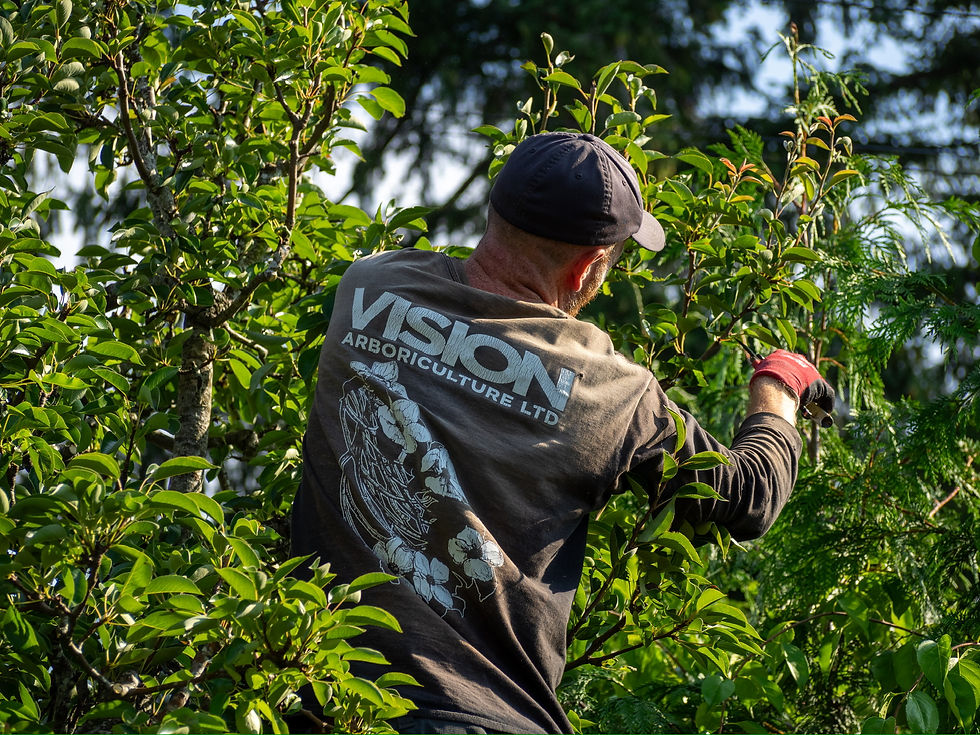
At Vision Arboriculture, we believe that caring for land means understanding what is already there, recognizing its value, and making thoughtful decisions about its future.
The trees we inherit are part of our community's past. The trees we protect and plant today will become part of its future.
And perhaps one day, someone will stand beneath the shade of a tree we planted and be grateful that we thought to leave it there.
Explore Your Property's Potential
Not sure which trees on your property should be retained, how to care for established trees, or where new trees might thrive?
Our Property Stewardship Walk with ISA Board Certified Master Arborist Ben Boykiw offers an opportunity to explore your property, discuss its existing trees and landscape, and consider possibilities for the years ahead.
Further Reading
The plan outlines Campbell River's long-term vision for tree protection, canopy growth, biodiversity, and community stewardship.


Comments